Isaac Choua
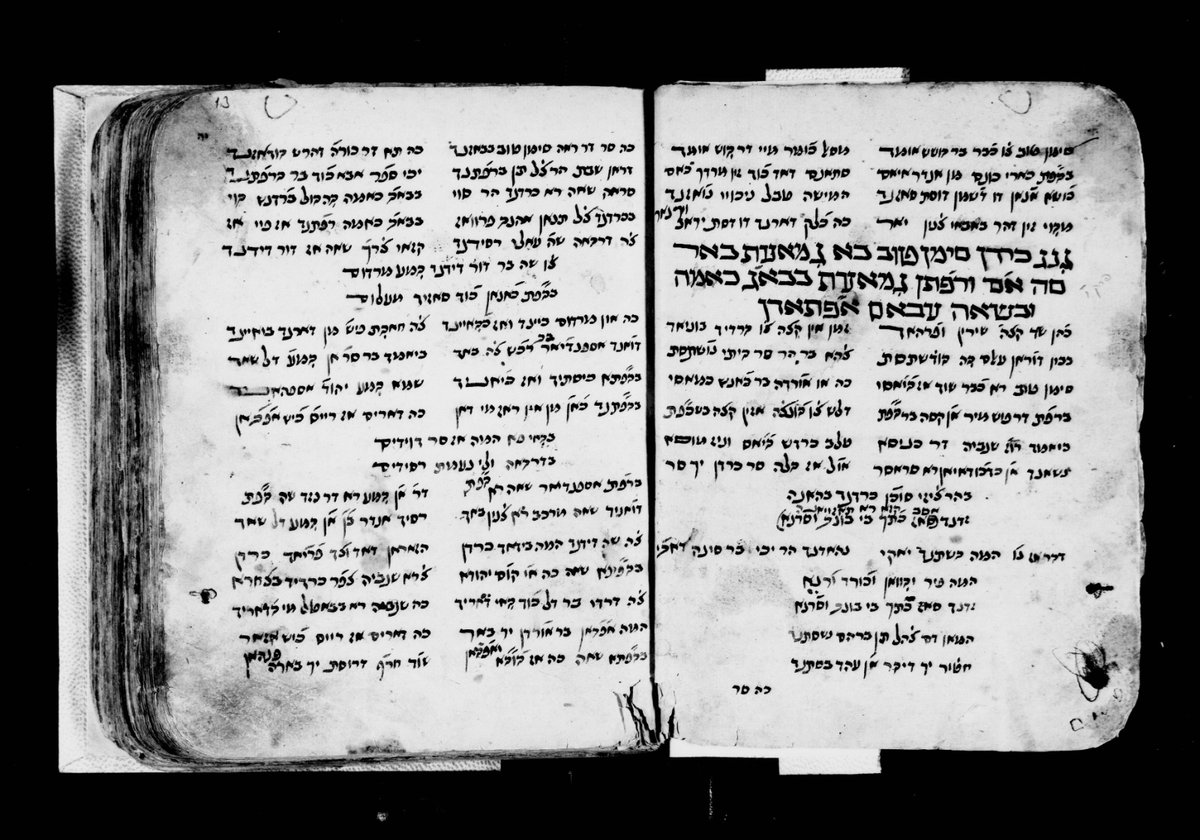
It’s absolutely wild to think about how many times Jews within the Persian Empire were forced to convert to Islam. I often think about Kitāb-i Anusī (The Book of a Forced Convert) by Bābāī ben Luṭf, the first known Judeo-Persian chronicle. It recounts the periodic persecutions of Iranian Jews of the Ṣafavid era (1501–1736). I vividly remember learning about it over 10 years ago and being struck by the idea of living a life so defined by repeated forced conversions that you felt compelled to document it. And not just document it! it’s written in rhymed couplets in the masnavī form, spanning 5,115 verses. For anyone doubting its authenticity, Kitāb-i Anusī is corroborated by references to external events that align with royal Iranian chronicles and other sources. Of course, the pain of forced conversion didn’t start with this book, nor did it end when it was written. Jewish communities across Iran repeatedly faced upheavals. For example, Mashhad’s Jewish population became a center of forced conversion in 1839 during the infamous Allāhdād (lit. "God’s Justice"). A hostile mob stormed Mashhad’s Jewish quarter, known as the ʿīdgāh, looted homes, destroyed Tora scrolls, abducted young girls, and killed dozens. Under the threat of annihilation, the community outwardly converted to Islam, beginning over a century of dual existence as Jadīd-i Islām (“New Converts to Islam”). While practicing Islam in public, they maintained their Jewish identity in secret, with underground synagogues and hidden rituals. What’s fascinating is the resilience of these communities. Mashhad’s Jews managed to preserve their identity even under intense scrutiny. The anusim (forced converts) had to creatively navigate challenges like Shabbath observance, kosher laws, and secret education, all while appearing to adhere to Islam. In Mashhad, by the mid-20th century, the community cautiously began to practice Judaism openly during the Pahlavi era. After the Islamic Revolution of 1979, many Mashhadi Jews emigrated to Israel or the United States, where they remain tightly knit, their cultural and religious practices deeply informed by this history. Understanding these histories gave me a deeper appreciation for my Mashadi Persian friends and their community. Their resilience and unique cultural practices suddenly made so much more sense. It's heartbreaking to recognize the overwhelming traumas we all carry from such histories.