Voice From The East

Voice From The East

@easternvoices · Twitter ·

🔴 Israeli security officials: Hamas plans to assign hundreds of the terrorists who are set to be released in the upcoming hostages deal to command positions within its military wing. Hamas confirms that the release of these prisoners will be used to rebuild its military strength and escalate activity in additional arenas, including Judea and Samaria. An article published in Hamas’s official outlet stated that Qatar and Turkey play a central role in providing political and financial support to the movement.

Voice From The East

Voice From The East

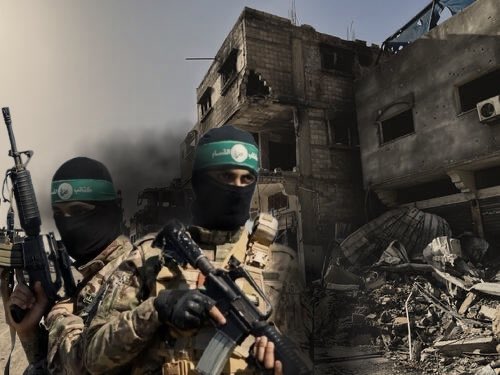
🔴 RUINS WARFARE: HOW HAMAS IS PREPARING FOR THE NEXT WAR Hamas is already preparing for the next war, training thousands of new fighters under Israel’s nose. While we celebrate the destruction of tunnels and the deaths of its commanders, Hamas is adjusting- faster and smarter than before. Israeli military sources tell me that despite the IDF’s current assault, Hamas keeps recruiting thousands of young fighters, promoted a new generation of commanders who survived Israel’s targeted killings, and begun training them based on hard-earned lessons from this war. Their tactics are tailored to Gaza’s shattered urban landscape, turning its ruins into an advantage. The leadership of Hamas has adapted too, perfecting survival methods to outmaneuver Israel’s relentless airstrikes. Each pocket of Gaza now operates as a tactical microcosm, designed to frustrate Israel’s efforts and ensure the group’s survival. The urban battlefield in Gaza epitomizes the complexities of modern urban warfare, where dense terrain, civilian infrastructure, and ruined environments become tools of asymmetric combat. Hamas has adapted to this evolving landscape by employing classic urban warfare principles: concealment, decentralization, and adaptation: 1. CONCEALMENT & SURVIVABILITY: The ruins of Gaza provide Hamas fighters with natural cover, making it easier to blend into the rubble and evade detection. These ruins are also perfect concealment for tunnel shafts and are a perfect excuse to bring in construction equipment to restore tunnels under the cloak of “rebuilding”. 2. ADAPTATION OF TACTICS: Hamas has tailored its strategies to the fragmented urban environment, using unique approaches for different neighborhoods. For example, ambushes, sniper fire, and booby traps exploit narrow alleyways and collapsed buildings, forcing Israeli forces to adapt to hyper-localized combat zones. In neighborhoods like Shuja’iyya, where entire blocks have been reduced to ruins, Hamas fighters have set up sniper positions and improvised explosive devices (IEDs) to target advancing Israeli troops. The collapsed buildings provide natural choke points and vantage spots, enabling small teams to hold off larger, more conventional forces. Such tactics not only slow Israel’s advance but also increase the operational cost of every territorial gain. 3. DEVOLUTION OF COMMAND: With senior leadership under constant threat from targeted strikes, Hamas has empowered a younger generation of field commanders, decentralizing decision-making to ensure operations continue even amid heavy losses. This mirrors the principle of maintaining operational resilience by diffusing authority in chaotic environments. The ongoing conflict highlights how urban warfare principles, when coupled with innovative adaptations to devastated terrain, allow an insurgent force like Hamas to sustain and evolve under immense pressure. The challenge for Israel lies in overcoming these adaptations without being bogged down by the very environment designed to trap them. If Hamas isn’t completely obliterated, every sacrifice, every soldier lost, every shekel spent - will have been for nothing. The spark of life within Hamas will grow, and when the moment is right, it will reignite into a renewed threat. Not just against Israel’s security, but directly against the border communities that can’t endure another nightmare. Israel must finish the job, and it must do so now, before Hamas rises from the ashes stronger than ever.
Quoted post media
Post media