harryspoelstra
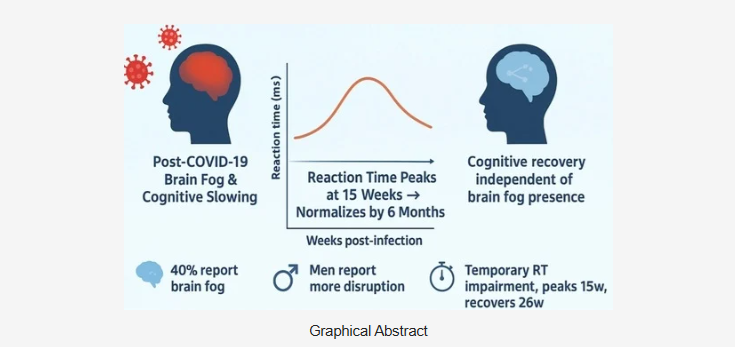
Long-Term Health Consequences of SARS-CoV-2: Reaction Time and Brain Fog ‼️ATTENTION, IMPORTANT “REACTION TIME” CONFIRMATION STUDY from Croatia, Serbia, and Bosnia and Herzegovina. ➡️"This multicenter study(599 participants) provides robust evidence that SARS-CoV-2 infection is associated with transient but measurable impairment in cognitive processing speed, as reflected by changes in reaction time (RT), even among non-hospitalized adults without pre-existing neurological disease." ➡️"Reaction time slowing peaked approximately 15 weeks after COVID-19 infection and gradually normalized by six months post-recovery, suggesting a time-limited post-viral cognitive effect rather than permanent impairment." ➡️"Importantly, RT impairment occurred independently of self-reported brain fog, indicating that subjective cognitive complaints and objective cognitive performance do not fully overlap." ➡️"While brain fog was reported by nearly half of individuals recovering from COVID-19 and was associated with substantial disruption of daily functioning—particularly among middle-aged men—its presence alone did not consistently predict objective slowing of reaction time." ➡️"These findings underscore the multidimensional nature of post-COVID cognitive sequelae, in which psychological, neurological, and functional components may follow partially distinct trajectories." ➡️"The observed age- and sex-related differences further highlight the need for individualized clinical assessment." ➡️"Older age was consistently associated with slower reaction times, while men demonstrated faster baseline RTs but reported greater functional impact of brain fog, particularly in occupational settings." ➡️"These patterns suggest that demographic factors may modulate both vulnerability to post-COVID cognitive symptoms and their perceived burden." ➡️"From a clinical perspective, this study supports the integration of simple, accessible reaction time testing into routine primary care follow-up of patients recovering from COVID-19." ➡️"RT assessment offers an objective, low-cost tool for detecting subtle cognitive changes that may not be captured through patient self-report alone." ➡️"Early identification of post-COVID cognitive slowing could facilitate timely counselling, reassurance regarding expected recovery, and targeted monitoring of individuals at higher risk of prolonged impairment." ➡️"Finally, these findings reinforce the importance of a biopsychosocial approach to post-COVID care." ➡️"Effective management of brain fog and related cognitive symptoms should combine objective assessment, patient-reported outcomes, and psychosocial support." ‼️Synthesizing evidence from this and other studies, even mild SARS-CoV-2 infections can induce transient or persistent reaction time slowing and cognitive deficits, while reinfections amplify these effects through cumulative neurological damage, substantially elevating the risk of enduring brain fog and sustained reaction time impairments(=Dangerous for certain occupations!). https://www.mdpi.com/2035-8377/18/1/6