Harry Spoelstra
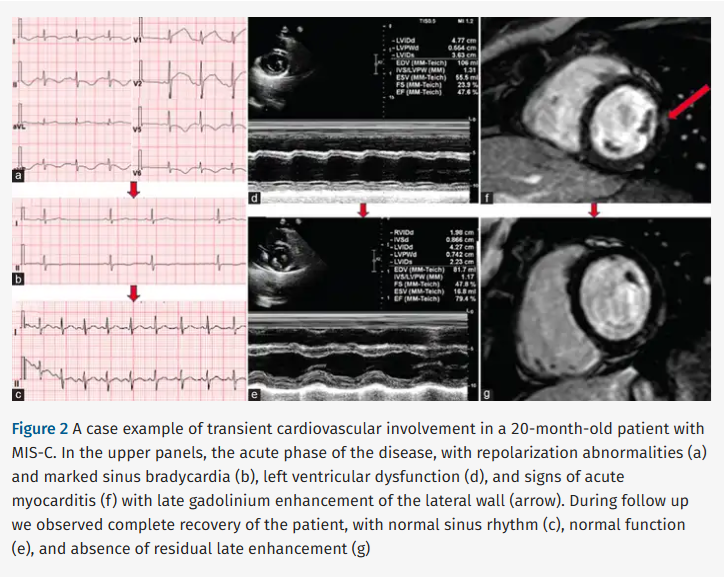
Cardiovascular Involvement of Multisystem Inflammatory Syndrome in Children: A Multicentric Observational Study on Mid- and Long-term Follow-up with Cardiovascular Imaging 🚨MIS-C heart damage: 10% of kids still show mild abnormalities >7 months later, even when the acute phase looked “mild.” Mandatory Long-term imaging follow-up! ➡️This Italian multicentric retrospective observational study examined 29 children (<16 years, mean age 7.2 years, 20 males) with MIS-C and cardiovascular involvement from three Sicilian centers (2021–2023). ➡️Acute features included: - Pericarditis (72.4%), - Valvulitis (51.7%), - Myocardial dysfunction (EF <55%; 34.5%), and - Coronary dilatation (10.3%), - ECG abnormalities occurred in 65.5%, - CMR (in 11 patients) mostly showed myopericarditis, - Elevated Troponin T (>105 ng/mL) and NT-proBNP (>5817.5 pg/mL) predicted myocardial dysfunction(ROC cut-off), - Macrophage activation syndrome (MAS, 17.2%) raised the risk 12-fold, - Eight patients needed ICU care, - All survived the acute phase. ➡️Mid-term (1–6 months) follow-up: - Showed normalized ECGs but mild echo abnormalities in 24%. ➡️Long-term (>7 months): - Residual mild abnormalities (pericardial changes, borderline EF, or prior myopericarditis signs on CMR) persisted in up to 10.3% of cases, - NO link to acute-phase severity, ➡️Conclusion: “MIS-C with cardiovascular involvement has a substantial incidence of acute myocardial dysfunction, particularly in patients with higher levels of TroponinT and BNP and in those who developed MAS. Cardiovascular abnormalities are usually transient. However, in 10% of cases, mild abnormalities are still detected by cardiovascular imaging in the long-term, without any correlation with the severity of the acute phase.” ‼️Bottom line (August 2026): MIS-C remains, today, a recognized but rare complication of SARSCoV2 infection. Incidence has dropped sharply but CONTINUES at low, sporadic levels rather than the earlier waves that followed major COVID-19 surges(CDC). So, MIS-C is no longer a high-volume public-health emergency. It is a rare event that paediatricians and emergency clinicians still must keep on their differential diagnosis(TEST/PCR!), especially in previously healthy school-aged children presenting with fever, inflammation, and multi-system findings. Most children recover well with prompt treatment, but structured follow-up, as this study again demonstrates, remains strongly advised! #AvoidSars2 #AvoidReinfections #PROTECTCHILDREN https://www.ovid.com/jnls/jceg/fulltext/10.4103/jcecho.jcecho_106_25~cardiovascular-involvement-of-multisystem-inflammatory