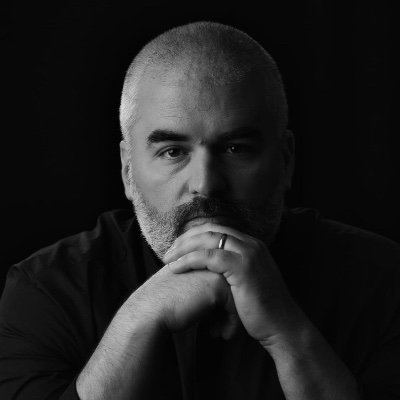
Haviv Rettig Gur
This shabbat's Torah reading is one of the most interesting. It's almost certainly the most exciting. It's called "Beshalach," "When he sent." It continues the story of the Exodus in the heart-pounding flight from Pharaoh's pursuing chariots and the famous miracle of the splitting of the sea. And it tells us perhaps the most important single thing the Torah wants us to know about where faith comes from and what it's for. Those great miracles, the last-minute rescue from the terrifying pursuer, the mind-boggling, physics-altering miracle that rescued them when the sea parted, Pharaoh's army sinking into the sea - "and they believed in God and Moses his servant," the Torah tells us moments later. And then, saved and astonished, they sing, all the people, all at once, all together. About God's strength and majesty and power. And then Miriam leads the women in another special song. And then, the Torah continues, the people leave the shores of the sea, "walk three days in the desert and cannot find water." And when they finally do, the waters are too bitter to drink. And then everything, all at once, reverts to the mean. The people immediately turn on Moses, demanding, "What will we drink?" And a frustrated Moses "shouts to God." The greatest moment of miraculous witness in the history of, well, history, and it only took the first momentary crisis (they had drinkable water by day's end) for everything to collapse. It took just three days from spectacular rescue - the Torah spares no words in conveying repeatedly the people's amazement and gratitude, and explicitly tells us about the vast reservoirs of faith built up by the experience - for it all to evaporate. Great faith born in astonishing miracles, it turns out, won't carry you very far. Prof. Yeshayahu Leibowitz noticed this jarring pivot of the narrative. Here's what he had to say: "In this story, the Torah comes to teach us a very great thing, and Biblical history in its entirety teaches and reteaches it: That the world of miracles and wonders and signs is meaningless religiously and inefficient for producing faith." Faith and devotion come not from the outside, but from within. "And thus it follows that one's knowledge of himself through standing before God, on which the reparation of humanity and the world depend, cannot come from outside intervention. It is the great task placed on people. Faith cannot be founded on and does not flow from a miraculous revelation. It demands and requires that one struggle to this recognition - and specifically under the conditions one finds in the day-to-day, the prosaic aspect of life, shorn of miracles, signs or wonders and without song. And in fact in the opposite [of those things]: A world of challenges and obstacles, and problems many and great." Miracles are not truth. Wonders cannot be the reason we commit and remain devoted. We forget surprisingly quickly to be grateful for even the most profound and personal rescue. Devotion, strength and reparation are acquired not in great and wondrous and effusive moments, but in the daily grind. What we do now, in this moment, to those around us and to ourselves, is what lasts, is the real thing, the measure of our faith and our moral standing. All the rest, to borrow from Rabbi Hillel, is commentary. Shabbat shalom.