Illia Ponomarenko 🇺🇦
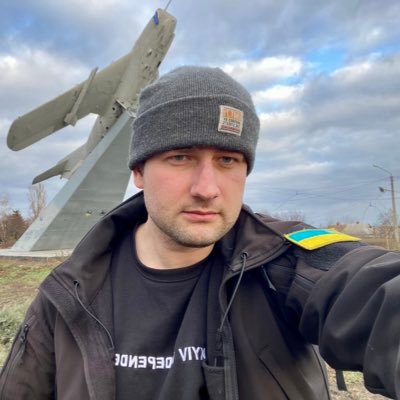
Alright, I guess it falls to me -- just an ordinary guy from Ukrainian Donbas -- to explain a few obvious things to a New York real-estate developer who seems to care a lot more about the “commercial opportunities” being dangled in front of him by Putin and his mob fixer Kirill Dmitriev than about Ukraine, this region, or the questions of war, life, and death for millions of people whose fate he so casually talks about. You see, real life is a bit more complicated than a primitive two-color map where Ukrainian regions are divided into “Ukrainian-speaking” and “Russian-speaking.” Believe it or not, speaking Russian in everyday life does not mean wanting to live under Russian rule and the dictatorship of Vladimir Putin. It doesn’t mean you’re somehow “by default” obliged to belong to Russia or serve the imperial whims of Vladimir Putin. Especially not after the 2014 invasion -- and especially not after the slaughter that the business partners in the Kremlin unleashed on what is now an almost completely destroyed Donbas. That horror opened countless eyes and finally shattered many illusions about what the so-called “Russian world” really is -- a plague, bringing death and cemeteries among the ruins of once-prosperous cities like Mariupol and Bakhmut. You might be surprised, but back in 2014 the main centers for forming “volunteer battalions” were not Lviv or Ternopil -- they were “Russian-speaking” cities like Dnipro and Kharkiv. They created and filled numerous famed units made up of local residents who took up arms to repel Russia’s hybrid invasion of Donbas when the regular army and the state were in collapse and paralysis. That’s because we, the “Russian-speaking” Ukrainians, already understood perfectly well what was happening -- and made our final, irreversible choice in favor of Ukraine. You might be surprised again, but when business partners in the Kremlin, through collaborators, saboteurs, and unmarked Russian regular forces, occupied Donetsk and Luhansk in 2014–2015, the majority of the region’s educated, entrepreneurial, and democratic-minded population fled those “people’s republics,” which quickly turned into depressed criminal cesspools. They left their homes and apartments and moved -- believe it or not -- to areas under Ukrainian control: to Kyiv, and to its peaceful suburbs like Irpin and Bucha (where I live), where so many of our fellow Donetsk natives started new lives from scratch. And here’s a little hint for the self-proclaimed “experts” and “journalists”: even in Donbas, pro-Russian Russian-speaking people never identified themselves as “ethnic Russians” -- only as Ukrainians who just happened to speak Russian. No matter what years of Russian war propaganda tried to claim about the “Russians in Donbas.” If you think you know better than me -- someone born in Volnovakha, who grew up and lived there most of his life -- you’re mistaken. And believe it or not, even now, in the fourth year of Russia’s full-scale slaughter in the so-called “Russian-speaking regions,” masses of Russian-speaking Ukrainians have fled and settled in Kyiv, Lviv, or Chernivtsi -- something you can easily notice just by walking through those cities. I won’t even start on how many “Russian-speaking” Ukrainians are fighting right now in the Ukrainian army on the front lines against the Russian plague that came to their land. Why is that? Because we have long been part of the Ukrainian nation -- part of its political and cultural space. Our capital is ancient Kyiv, not Moscow. We argue about and criticize Ukrainian politicians whose decisions shape our lives. We took part in the revolutions, the elections, the wars for this country. We cheer for the Ukrainian football team, for Ukrainian singers at Eurovision. Most of us, one way or another, see Ukraine as our country and our future — and today, more than ever in modern history, we are farther from Russian cultural space and closer to our fellow Ukrainians from Lviv, Lutsk, Ternopil, and Vinnytsia than ever before. That’s called shared national values. The democratic, European, and Euro-Atlantic Ukraine that is fighting for its survival and freedom against an imperial invader -- the Ukraine we’ve been trying for a decade to reform and make a better place to live -- that’s us. That’s who we are. That’s what we believe in, and what matches our values and vision of the future. And many of us from the “Russian-speaking regions” have already switched to Ukrainian in daily life and in public, returning to the embrace of Ukrainian culture and tradition -- and rejecting “Russian” with disgust and anger, because we don’t want to have anything in common with the fascist Russia of today, which brings only bloodlust, war, hatred, chauvinism, aggression, and the deceitful hypocrisy of its brainwashing television propaganda. And frankly -- until our last breath -- we will want nothing to do with your Russia. After all it has done -- killing our friends and relatives, taking our homes, and turning our “Russian-speaking cities” into vast cemeteries amid ruins where life will never return.