Maarten Boudry
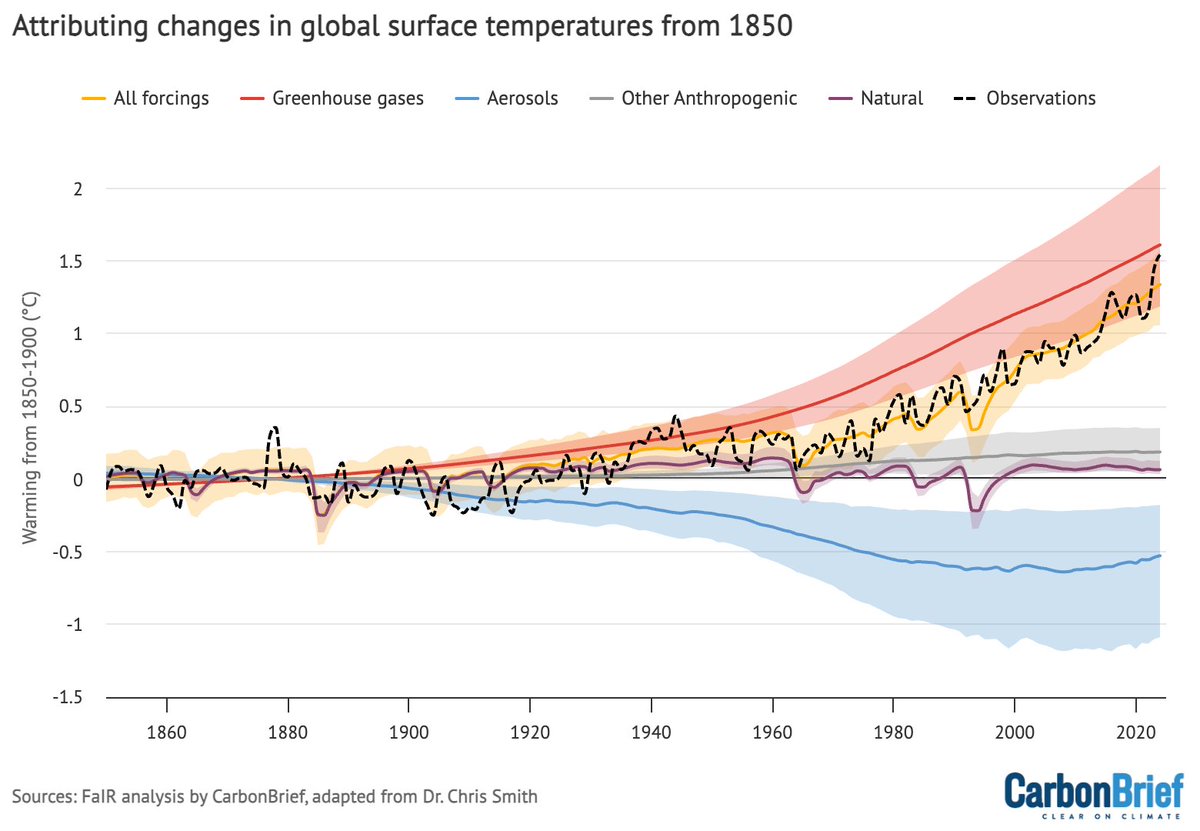
A very instructive graph, showing the contributions of different sources of radiative forcing—greenhouse gases, aerosols, natural factors—to observed warming, courtesy of @hausfath. One thing surprised me, though: the line for aerosols (negative cooling contribution) has increased only modestly since the 1980s. Yet global sulfur emissions have fallen by more than 40% in the past two decades alone, unmasking a substantial amount of previously suppressed warming. Wouldn't you therefore expect the aerosol "contribution" to have increased more? Or is this due to diminishing cooling returns with each additional SO₂ molecule removed, @hausfath? If you zoom in on Europe—where air pollution has declined most dramatically—I would expect the contribution from the reduction of aerosol cooling to be more pronounced than in the global aggregate. Is that right? Graph discussed in this @CarbonBrief explainer: https://www.carbonbrief.org/qa-how-do-climate-models-work/
Maarten Boudry
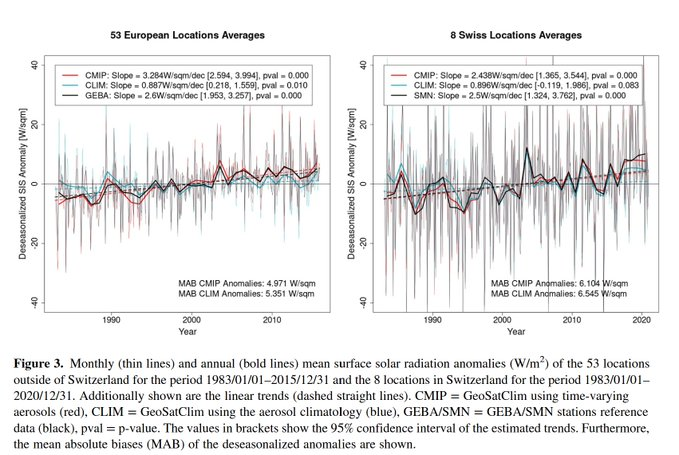
Why are summers in Europe so much hotter than 30 years ago? And why does the sun itself feel so intense? Is that all global warming? Here's how I understand it: 🌙 Warmer nights: the greenhouse effect runs day and night, but it manifests mostly at night, as CO₂ traps heat and